
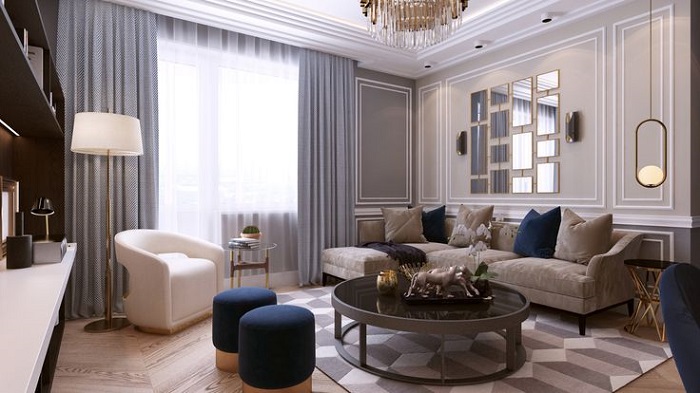
An elegant renovation is an approach to home renovation where beauty doesn’t compromise comfort, and quality is felt in the details. Its goal is to create a cohesive space where materials, lighting, layout, and furniture are consistent and reflect the owners’ character without turning the interior into a display of status.
The essence of elegance lies in restraint, clear proportions, and thoughtful functionality. This type of luxury home renovations Calgary isn’t equated with “expensive and opulent”: it values the tranquility of forms, the tactility of surfaces, neat joints, and durable solutions that won’t become outdated after a season.
What does “elegant” mean in renovation?
Elegance in interior design is a balance between aesthetics and engineering. The space appears light, but behind this lightness lie precise calculations, competent materials, and respect for everyday life.
Signs of an elegant renovation
- A holistic concept: a unified palette, repeating motifs, coordinated textures.
- Clean lines and proportions: symmetry where appropriate, and rhythm in the arrangement of elements.
- Quiet execution: even joints, precise gaps, neat corners, no “random” solutions.
- Quiet luxury: the high cost is felt not in the shine, but in the tactility and durability.
- Functionality: convenient passages, storage, thoughtful ergonomics of the kitchen and bathrooms.
Summary: elegance in the interior – quality, appropriateness, and Measure
Elegance in an interior doesn’t mean “expensive” or “lavish,” but rather precise: when every detail is justified by function, proportions, and the overall concept. Such a renovation feels cohesive and calm because it avoids random decisions and ostentatious effects.
The essence of an elegant renovation is balance: materials and execution convey a sense of quality, context determines appropriateness, and self-restraint keeps the interior within the bounds of good taste. The result is a space that lasts a long time and remains comfortable to live in.
Signs of Well-Sustained Elegance
- Quality is evident in the details: smooth geometry, neat joints, correct abutments, reliable hardware, tactilely pleasing surfaces.
- A restrained palette: 2-4 primary tones with logical accents, without “shouting” colors and textures.
- Clear proportions: furniture proportionate to the room’s scale, carefully measured passage distances, the correct height of lamps and cornices.
- Appropriateness to the living scenario: the interior supports everyday life, storage, cleaning, privacy, and lighting in the right areas.
- Moderation in decor: fewer items – greater expressiveness of each; One accent, the rest serves as background.
- Unity of solutions: repetition of materials and lines, coordination of metals and shades, no “different styles in one room.”
- Comfortable lighting: a combination of general, task, and accent lighting without excessive brightness or random temperatures.
- Quality check: if you remove the decor, will good materials, neat finishes, and a well-thought-out layout remain?
- Appropriateness check: does the chosen family lifestyle, home architecture, and maintenance budget fit in?
- Proportion check: can you remove 10–20% of elements without losing their meaning—and will it improve things?