
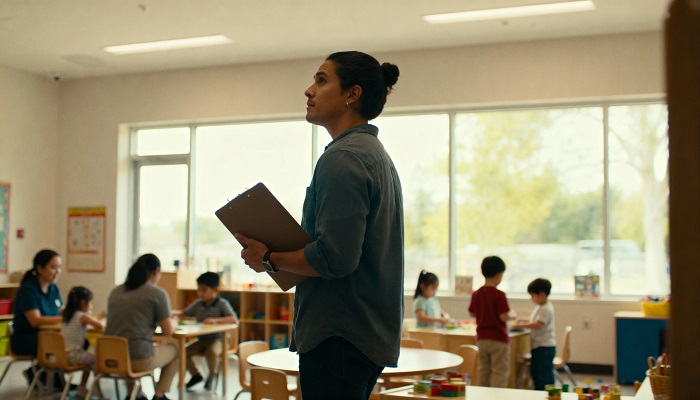
It’s important for parents who are sending their child to daycare to recognize warning signs that may indicate problems.
Red Flags When Touring a Daycare: A Childcare Director’s Honest ChecklistBy Little Bee’s Child Care Center
After nearly two decades running a childcare center, I’ve seen what parents miss during tours. Last month, a parent told me she almost enrolled her daughter at a center with gleaming equipment and gorgeous marketing, but something felt “off.” Learning to spot red flags when touring a daycare isn’t about being paranoid – it’s about trusting your instincts and knowing what questions to ask.I’m sharing what I’ve learned from the inside about warning signs that should make you pause or walk away. Some are obvious safety concerns. Others are subtle indicators this center isn’t the right fit. Consider this your honest, no-sugar-coated checklist from someone dedicated to quality childcare.
Red Flag #1: Restricted Parental AccessAny quality daycare should welcome parents anytime during operating hours. If a center says you can’t tour during “nap time” or requires advance scheduling for every visit – that’s a problem.What this tells you:Restricted access often hides something: understaffing, poor classroom management, or failure to follow stated procedures.What good centers do:Open-door policies. They might ask you to be quiet during nap time, but they’ll still let you observe.
Red Flag #2: Unhappy or Tense StaffWatch teachers closely. Do they smile and greet you warmly? Or avoid eye contact, seem tense, or look relieved when you leave?Warning signs:
– Checking the clock constantly
– Looking anxious when the director appears
– Unable to answer basic curriculum questions
– Seeming disconnected from children
– Speaking negatively about policiesWhat this tells you:Unhappy teachers signal poor management, inadequate support, or toxic culture. Teachers who love their jobs will naturally be warm and engaging.
Red Flag #3: High Staff TurnoverAsk directly: “What’s your staff turnover rate? How long have your lead teachers been here?”What this tells you:Constant changes disrupt children’s attachment. High turnover signals inadequate pay, poor management, or problematic conditions.What good centers report:Most lead teachers have been there for years. They’ll proudly tell you specific tenures: “Ms. Sarah has been with us for eight years.”
Red Flag #4: Bad SmellsTrust your nose. A center should smell clean – maybe play-dough or paint, occasionally diapers being changed. But it shouldn’t consistently smell like urine, mildew, or have overwhelming diaper odor throughout.Specific concerns:
– Mildew or mold (health hazard)
– Overwhelming diaper smell outside changing areas
– Musty smell suggesting poor ventilationWhat this tells you:Persistent bad odors indicate inadequate cleaning or poor maintenance. If basic cleanliness is neglected, what else is?
Red Flag #5: Children Seem Unhappy or DisconnectedLook at enrolled children. Do they seem engaged and happy? Or bored, upset, or checked out?What to observe:
– Are children actively engaged in activities?
– Do they seem comfortable approaching teachers?
– Are multiple children distressed (not just normal drop-off tears)?
– Are children wandering aimlessly?Context matters:One crying toddler is normal. A room full of disengaged or distressed children is a red flag.
Red Flag #6: Vague or Defensive AnswersPay attention to how staff respond to questions. Do they answer clearly? Or get defensive, vague, or irritated?Red flag responses:
– “We follow all state requirements” (without specifics)
– “We’ve never had problems” (everyone has occasional challenges)
– “That’s just our policy” (without explaining why)
– Getting annoyed when asked about safety
– “Don’t you trust us?”What this tells you:Defensiveness suggests they’re hiding something or don’t understand their own practices. Quality programs are transparent.
Red Flag #7: Pressure TacticsBeware of centers that pressure immediate enrollment or make you feel guilty for touring other options.Warning signs:
– “We only have one spot left – it’ll be gone tomorrow”
– “Why would you need to see other centers?”
– Requiring immediate deposits before you’ve toured
– Discouraging you from talking to current parentsWhat this tells you:Quality programs are confident enough to let you take your time. Pressure suggests desperation for enrollment (why?).
Red Flag #8: Inadequate or Unused Outdoor SpaceAsk when children go outside and request to see the play area. If they hesitate or it looks dangerous/unused, pay attention.Red flags:
– Broken or rusty equipment
– No age-appropriate options
– Standing water or safety hazards
– Staff admits they “rarely go outside”What this tells you:Children need outdoor time for development. Centers that don’t prioritize or maintain safe outdoor spaces aren’t prioritizing wellbeing.
Red Flag #9: No Clear CurriculumWhile play is essential, quality programs can articulate their educational approach. If staff can’t explain what children are learning or why activities are chosen, that’s concerning.Red flag answers:
– “We don’t really follow a curriculum”
– “They just play” (no explanation of learning goals)
– Inability to describe educational philosophy
– No documentation of progressWhat quality programs do:They can describe their curriculum and explain how play supports learning. At programs like those at Little Bee’s Child Care Center, educators clearly explain the 1-2-3 Curriculum and how activities support development.
Red Flag #10: Insufficient SupervisionCount heads. Are there enough teachers for the number of children? Can you see moments where children aren’t supervised?What to look for:
– At least one teacher has eyes on all children always
– Adequate staff during transitions
– No children left unsupervised, even brieflyRed flags:
– Children left alone momentarily
– One teacher overwhelmed with too many children
– Staff having personal conversations while children are unsupervised
Red Flag #11: Poor Communication SystemsAsk how they communicate about daily activities, incidents, or concerns. If they seem surprised or don’t have a system, that’s problematic.What good communication looks like:
– Daily reports (especially for infants/toddlers)
– Clear contact policy
– Regular conferences
– Transparency about incidents
– Multiple ways to reach staff
Red Flag #12: Too Chaotic or Eerily SilentBoth extremes are concerning. A center should have a pleasant hum of activity – children’s voices, occasional laughter, play sounds. But not complete chaos or library silence.Too chaotic:Children running wild, constant screaming, teachers yelling, no structureToo quiet:Children seem fearful of noise, excessive silence rules, no laughter, everyone looks anxiousHealthy sounds:A busy but controlled environment. Children talking and playing, occasional teacher guidance, structured activities balanced with free play.
Red Flag #13: Health and Safety FailuresWatch for basic failures during your tour:Immediate concerns:
– Cleaning supplies within children’s reach
– Medications not secured
– Unsecured gates to dangerous areas
– Visible electrical hazards
– Sharp or broken items accessible
– Choking hazards in infant/toddler rooms
– Dirty bathrooms or diaper areasQuestions to ask:Emergency procedures? How do you handle allergies? When was your last health inspection? Who’s trained in CPR?
Red Flag #14: No References AvailableEvery quality center should connect you with current families. If they refuse or make excuses, ask yourself why.What this tells you:Centers confident in their quality know families will speak positively. Reluctance suggests unhappy families or something to hide.
Red Flag #15: Your Gut Says Something Is OffFinally, trust your instincts. If something feels wrong but you can’t pinpoint why, listen. Your subconscious is processing information your conscious mind hasn’t articulated.Common triggers:
– Staff seem stressed or unhappy
– Children don’t seem genuinely engaged
– Director avoids questions
– Environment feels cold
– You wouldn’t feel comfortable leaving your child thereWhy this matters:Parents’ instincts exist for a reason. If multiple small things feel “off,” they probably are.
What Quality Centers Look Like InsteadTo help you recognize the difference, here’s what you should see:
– Happy, engaged children in purposeful activities
– Teachers who smile naturally and interact warmly
– Clean, safe, clearly maintained environment
– Clear curriculum that staff can articulate
– Open communication about policies
– Transparent parental access anytime
– Low staff turnover with experienced teachers
– Active outdoor play daily
– Proper safety protocols followed
– Welcoming atmosphere where questions are encouraged
How to Use This ChecklistBefore your tour:Print this checklist, add your specific concerns, prepare questionsDuring your tour:Trust your senses, observe teacher-child interactions, note the atmosphere, ask prepared questionsAfter your tour:Write down impressions immediately, list red flags noticed, talk to references, compare centersMaking your decision:
– Any major safety red flag is automatic disqualification
– Multiple small red flags add up
– Trust your gut if something felt wrong
– Choose where you feel most comfortable
When to Walk Away ImmediatelySome red flags end the tour immediately:
– Any visible safety hazard
– Children being treated harshly
– Staff unable to account for children’s whereabouts
– Refusal to answer basic safety questions
– Obvious understaffing creating unsafe ratios
– Visible health code violations
– Significantly restricted parental accessDon’t second-guess yourself on serious safety issues. A shiny building can’t compensate for fundamental safety failures.
Final ThoughtsLearning to spot red flags when touring a daycare isn’t about being overly critical – it’s about being informed and intentional. Your child will spend countless hours in this environment during crucial developmental years.Good childcare centers want educated parents who ask tough questions. They know informed families make the best partners. If a center makes you feel bad for being thorough, that itself is a red flag.Remember, no center is perfect. Even the best programs have room for improvement. But there’s a difference between minor imperfections and serious red flags. Learn to distinguish between the two.The goal isn’t finding a perfect daycare – it’s finding a safe, nurturing, high-quality environment where your child will thrive and you’ll feel confident and supported.For more information about what quality childcare looks like and what questions to ask, visit Little Bee’s Child Care Center. We believe parents deserve transparency and programs that welcome questions rather than deflect them. Whether you choose us or another quality provider, we hope this checklist helps you make the best decision for your family.Your child deserves the very best care. Armed with this knowledge, you’re equipped to find it.
—About the Author:This article was written by the leadership team at Little Bee’s Child Care Center in Spring Lake Park, Minnesota. With nearly two decades of experience in early childhood education, we’re committed to helping parents navigate the process of choosing quality childcare.