
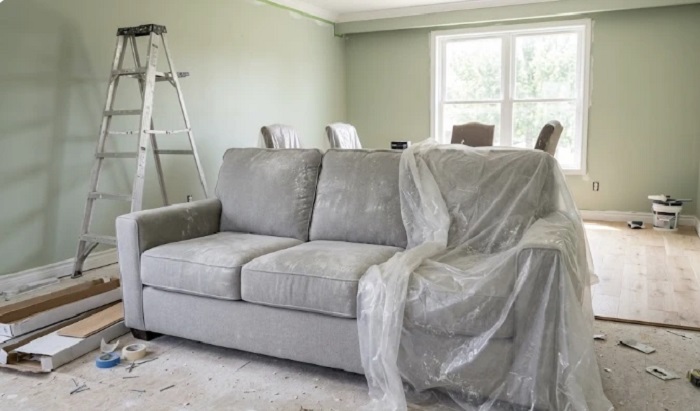
You’ve planned the renovation for months. The contractor is finally done. The new floors are laid, the walls are painted, the kitchen or bathroom looks exactly the way you envisioned. The construction crew packs up and leaves, and for a moment you stand in the middle of your newly transformed space and feel the satisfaction of a project completed.
Then you sit down on your sofa and notice it. A dull, slightly gritty feeling to the fabric. A faint smell of drywall and paint that wasn’t there before. The cushions look marginally less vibrant than they did when the project started. Your furniture — which was perfectly clean before any work began — has silently absorbed weeks of construction activity.
This is one of the most overlooked aspects of any home renovation: the impact on existing furniture and upholstery. Renovation projects generate a specific and particularly damaging type of contamination, and understanding it is the key to completing your remodel properly — all the way to the finish line.
What Renovation Work Actually Does to Your Upholstery
The contamination that a renovation deposits in your furniture is different in character from ordinary household soil, and it’s worth understanding exactly what you’re dealing with.
Construction Dust Penetrates Deeper Than You Think
Drywall dust, plaster, sanding residue, and concrete particulates are extraordinarily fine — significantly finer than ordinary household dust. This fine particle size means they travel farther through the air and penetrate deeper into fabric fibers than regular dust ever would. While ordinary household dust sits largely on the surface of upholstery and can be removed by vacuuming, construction dust works its way into the mid-layers of the fabric pile and even into the cushion fill beneath.
This is why post-renovation furniture that’s been vacuumed still looks slightly dull and still has that characteristic gritty feeling. The surface has been cleaned. The embedded layer hasn’t.
Chemical Residues from Paints, Adhesives, and Sealants
Modern renovation materials — paints, primers, adhesives, grouts, sealants, and finishing compounds — all off-gas volatile organic compounds (VOCs) during and after application. These compounds don’t just create temporary odors; they settle on fabric surfaces and can cause long-term discoloration and material degradation if not properly removed. Light-colored upholstery is particularly vulnerable, as VOC deposits can cause gradual yellowing that worsens over time.
Moisture Fluctuations
Renovation work introduces significant moisture fluctuations into a home — from concrete work, tile setting, plastering, and painting. These fluctuations can affect upholstery in ways that aren’t immediately visible: encouraging mold spore activity in fabrics that absorbed moisture, causing foam cushion fill to develop odors, and accelerating the degradation of natural fiber upholstery. In climates with already-high humidity — the Pacific Northwest is a clear example — this risk is amplified.
Physical Contamination
Beyond airborne particles, renovation work brings physical contamination: boot traffic from contractors carrying outdoor soil and construction debris, accidental contact from tools and materials, and in some cases direct contact damage from equipment moved through the space. Upholstered furniture that remained in a room during renovation — even covered with drop cloths — will have absorbed some degree of this contamination.
Why Standard Post-Renovation Cleaning Isn’t Enough
The standard post-renovation cleaning process — wiping surfaces, vacuuming floors, washing windows — addresses the visible layer of construction residue. It does not address what has penetrated into upholstered furniture.
Professional post-renovation upholstery cleaning uses hot water extraction or appropriate solvent methods — depending on the fabric type — to flush construction particulates, chemical residues, and VOC deposits from the full depth of the fabric pile. This is the only method that actually removes embedded construction dust rather than simply redistributing it.
The distinction matters practically because fine construction particles are mildly abrasive. Left embedded in fabric fibers, they accelerate wear every time the furniture is used — each time someone sits down, those particles work against the fiber structure. A sofa that survived the renovation visually intact can still have its lifespan shortened significantly if the embedded construction residue isn’t removed.
The Post-Renovation Upholstery Cleaning Checklist
A thorough post-renovation furniture care process covers several categories of upholstered items that are commonly overlooked:
Sofas and sectionals. The largest upholstered surface in most homes and the piece that absorbs the most renovation contamination by sheer volume. All cushion covers and the main frame upholstery should be treated, including the sides and back panels that don’t receive regular use — construction dust distributes itself uniformly across all exposed surfaces.
Armchairs and accent chairs. These pieces are often positioned in corners or against walls that may have been actively worked on — making them particularly vulnerable to direct contamination from drywall or painting work nearby.
Area rugs. Rugs are essentially filters for everything that lands on them, and during a renovation they collect an exceptional volume of construction particulates. Even rugs that were rolled up and stored during the work often accumulate dust around the edges and may carry some contamination from storage conditions. A rug that looks clean after a renovation almost certainly isn’t, by any professional standard.
Dining and accent chairs. Upholstered seat pads and backs on dining chairs are frequently overlooked in post-renovation cleaning because they’re smaller and seem less significant. But they accumulate the same construction residue and receive direct contact from occupants at every meal.
Mattresses. If any bedroom was adjacent to renovation work or served as temporary storage during the project, mattresses should be included in the post-renovation cleaning scope. Mattresses are among the most difficult items to clean effectively at home and among the most important for health, given the hours of direct contact involved in daily use.
Timing: When to Schedule Post-Renovation Cleaning
The optimal timing for professional post-renovation upholstery cleaning is after all construction work is completely finished but before the space returns to full regular use. Scheduling cleaning while any work is still ongoing means the furniture will simply be re-contaminated before it’s occupied.
In practice, this means booking the cleaning appointment as part of the renovation project’s final phase — alongside floor finishing, final paint touch-ups, and fixture installation. Build it into the project budget and timeline rather than treating it as an afterthought, because the cleaning needs will be predictable from the moment the renovation begins.
For homeowners in the greater Seattle area, post-renovation upholstery and furniture cleaning can typically be scheduled within a few days of project completion. A professional upholstery cleaning service in Mill Creek WA and surrounding communities brings full extraction equipment to the home, handles fabric assessment for each piece, and can address the full range of upholstered items in a single visit — making the post-renovation clean a single efficient step rather than a drawn-out process.
Protecting Furniture During Future Renovations
If you’re planning a renovation and want to minimize the post-project cleaning scope, preparation makes a significant difference. Moving upholstered furniture out of rooms being actively worked on is the most effective option when space permits. When furniture must remain in place, professional-grade plastic sheeting sealed at the edges provides far better protection than standard drop cloths, which allow fine particulates to pass through.
It’s also worth considering fabric protector treatments on high-value upholstered pieces before a renovation begins. Fabric protectors create a barrier at the fiber surface that makes subsequent cleaning more effective — particles bond less strongly to treated fibers and release more completely during professional cleaning.
The Complete Renovation
A home renovation is complete when every element of the space is in the condition it should be — not just the structural and cosmetic work, but the furnishings that make the space livable. Post-renovation upholstery cleaning is the step that closes the loop: it removes what the construction process deposited in your furniture and returns the entire space to a genuinely fresh state that matches the effort and investment you’ve put into the project.
Skipping it means living with the remnants of construction in the most-used pieces in your home. Completing it means the renovation is actually, fully done.