
Mouse control is rarely about one product or one service visit. In professional pest management, the goal is usually to understand where mice are active, how they are entering, what they are feeding on, and how activity can be reduced over time. A good rodent program may include inspection, exclusion, sanitation recommendations, monitoring, trapping, baiting when appropriate, and regular service documentation.
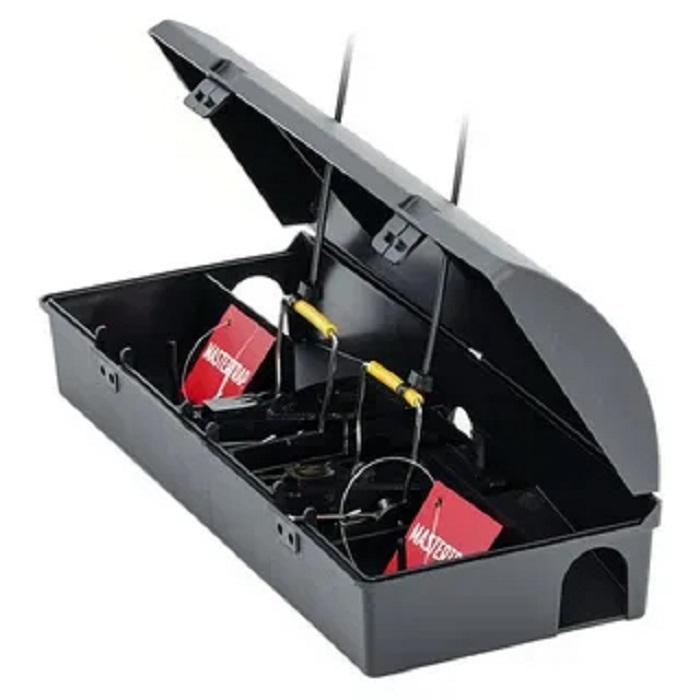
Within that larger process, mouse bait stations play an important role. They help pest management professionals place bait or monitoring tools in a more controlled, serviceable, and organized way. They also help support consistency across accounts where technicians need to inspect, maintain, and document activity over time.
For homes, restaurants, warehouses, commercial kitchens, grocery environments, offices, schools, and other sensitive accounts, the quality and placement of bait stations can affect both performance and service efficiency.
Why Mice Are Difficult to Control
Mice are small, fast, and able to use very limited space. They can move along walls, behind equipment, under shelves, inside storage areas, and around tight structural gaps. They may be active when people are not present, which means the first visible signs are often droppings, gnaw marks, damaged packaging, odors, or activity captured during inspection.
Common mouse activity areas include:
- Storage rooms
- Kitchens
- Garages
- Utility closets
- Warehouses
- Break rooms
- Food-prep areas
- Mechanical rooms
- Drop ceilings
- Wall-floor junctions
- Behind appliances
- Under shelving
- Around loading areas
Because mice use edges, corners, and hidden travel routes, control tools need to fit where activity actually occurs. Oversized devices are not always practical in tight spaces, especially in commercial accounts where equipment, storage racks, cabinets, and customer-facing areas limit placement options.
Why Placement Matters
A bait station is only useful when it is placed in the right location. Mouse activity is often concentrated along walls, behind objects, and near protected runways. Stations that are placed too far from activity may receive little attention, even if the product inside the station is appropriate.
Good placement depends on:
- Inspection findings
- Dropping locations
- Wall and edge travel routes
- Food-source proximity
- Entry points
- Storage patterns
- Equipment layout
- Customer safety
- Service access
- Label directions
- Account requirements
A compact station gives technicians more flexibility when dealing with real-world spaces. In many accounts, the best location is not a wide-open area. It may be behind a cooler, beneath shelving, in a narrow utility space, or near a wall where mice are already moving.
The Role of Mouse Bait Stations in IPM
Integrated pest management, or IPM, focuses on inspection, prevention, monitoring, and targeted control rather than relying on one method alone. Mouse bait stations can support IPM because they help organize control materials and allow technicians to track activity over time.
A professional mouse bait station may support:
- Controlled placement of bait
- Consistent servicing
- Monitoring of rodent pressure
- Account documentation
- Reduced access by non-targets when used properly
- Cleaner placement in sensitive areas
- Better technician efficiency
- Standardized service across multiple locations
Stations should always be used according to product label directions and applicable regulations. They are not a substitute for inspection or exclusion, but they are an important part of a complete rodent-management system.
Compact Design Helps in Tight Spaces
Many mouse problems happen in tight or awkward spaces. A bulky station may not fit where the technician needs it, which can lead to less effective placement. Compact mouse bait boxes are especially useful where space is limited but activity is present.
Examples include:
- Under commercial shelving
- Near kitchen equipment
- Behind storage racks
- Inside utility rooms
- Around office storage areas
- Along wall-floor junctions
- In mechanical spaces
- Behind appliances
- Near interior rodent travel paths
A station designed for tight spaces can help technicians place control tools closer to mouse activity while keeping the service setup organized and repeatable.
Durability Is Important for Repeated Service
Professional pest control devices must hold up to repeated use. A station may be opened, serviced, cleaned, checked, repositioned, and documented many times. Weak plastic, poor closure systems, difficult servicing, or fragile components can slow technicians down and reduce account consistency.
Durable station design helps with:
- Long-term account service
- Repeated opening and closing
- Field handling
- Transport and storage
- Consistent placement
- Technician confidence
- Professional presentation
- Reduced replacement frequency
For pest management companies, product durability is not only about the station itself. It also affects service time, inventory planning, and the way the program is presented to customers.
Serviceability Matters for Technicians
A station that is difficult to open, clean, or inspect can become a problem in the field. Technicians need to move through service routes efficiently while still checking each station carefully. Good station design should support both speed and accuracy.
Important serviceability features may include:
- Easy opening with the correct key
- Secure closure
- Clear interior access
- Room for bait placement
- Space for monitoring tools
- Drainage features
- Label or documentation areas
- Simple cleaning
- Consistent design across product lines
When technicians service many accounts, small design details can make a meaningful difference. A station that is easier to inspect and reset can support better compliance and more consistent documentation.
Bait Security and Organization
Professional rodent programs often require bait to be placed securely and in accordance with label directions. Stations help organize bait and reduce unnecessary exposure when used properly.
A good station may help:
- Keep bait in a defined location
- Reduce movement of bait within the station
- Support soft or block bait placement
- Improve service checks
- Limit access by non-targets when secured and used properly
- Keep the account cleaner
- Make consumption easier to monitor
The technician still needs to choose placement, inspect results, and follow all label requirements. The station supports the program, but the professional process determines how effective the program becomes.
Monitoring and Documentation
Mouse bait stations are also useful because they create defined inspection points. Instead of guessing where activity may be happening, the technician can check station locations over time and compare activity patterns.
This can help answer questions such as:
- Where is activity increasing?
- Which areas show repeated pressure?
- Are stations being disturbed?
- Is bait being consumed?
- Are conditions changing?
- Are sanitation or exclusion problems still present?
- Should placement be adjusted?
Documentation is especially important for commercial accounts. Restaurants, warehouses, food-handling facilities, and other regulated environments may need records that show rodent activity is being monitored and addressed consistently.
Commercial Accounts Need Practical Tools
Commercial rodent control often involves tight schedules, sensitive environments, and high expectations. A station must work within the reality of the account. It should fit the available space, be serviceable, support documentation, and look professional.
Commercial environments may include:
- Restaurants
- Food-processing facilities
- Warehouses
- Grocery stores
- Office buildings
- Schools
- Healthcare-adjacent facilities
- Apartment properties
- Retail spaces
- Hospitality properties
In these environments, rodent tools should be discreet, durable, and compatible with routine service. Poorly placed or difficult-to-service equipment can make the program harder to maintain.
Mouse Bait Stations Are Not a Standalone Solution
Even the best bait station cannot solve a mouse problem if the property still has food sources, open entry points, clutter, or moisture problems. Stations work best as part of a broader plan.
A complete rodent-management program may include:
- Exterior inspection
- Interior inspection
- Entry-point identification
- Exclusion recommendations
- Sanitation guidance
- Storage corrections
- Trapping or baiting where appropriate
- Monitoring
- Follow-up visits
- Customer education
This is especially important in accounts where mice are entering from outside or moving between adjoining spaces. If exclusion is ignored, activity may continue even when bait or traps reduce the current population.
How Product Design Supports Better Programs
The design of a bait station can influence how well it fits into a professional program. Compact size, internal capacity, secure bait placement, drainage, label areas, and compatibility with other tools all matter in day-to-day service.
Technicians benefit from products that are:
- Easy to place
- Easy to service
- Durable
- Compact
- Secure
- Clean in appearance
- Flexible across account types
- Compatible with bait or monitoring needs
- Consistent with professional workflows
This is where compact rodent monitoring stations for tight spaces can be especially useful. They help pest management professionals support programs in areas where space, access, and service efficiency all matter.
Questions Pest Management Companies Should Ask
Before choosing mouse bait boxes or bait stations, pest management companies should consider how the product will work in the field.
Useful questions include:
- Does the station fit tight spaces where mice actually travel?
- Is it durable enough for repeated service?
- Can technicians open and inspect it efficiently?
- Does it support bait placement and monitoring needs?
- Is the design appropriate for commercial accounts?
- Can it be documented and labeled clearly?
- Does it reduce unnecessary servicing frustration?
- Is it compatible with company routes and technician workflows?
- Does it support the larger IPM program?
- Is it practical for both residential and commercial environments?
The best choice is not always the largest station or the cheapest option. It is the product that fits the service strategy, account type, and placement needs.
Better Tools Support Better Rodent Programs
Mouse bait stations are a small part of a larger rodent-control system, but they can influence how well that system works. Professional programs depend on correct placement, consistent service, clear documentation, durable equipment, and follow-up. A station that supports these needs can make the technician’s work easier and the account’s rodent program more organized.
VM Products offers the MBS1® Mouse Bait Station, described as a compact and durable multifunctional bait station designed for use in tight spaces. The MBS1® includes a large internal bait area, a metal rod for soft and block bait, an optional baiting tray for insects, drainage holes, a raised lip around the front of the station, a service label, and compatibility with the VM Universal Key™. VM Products also offers the MBS+®, a compact mouse bait station designed to double bait placement with two metal snap-into-place rods.
For pest management professionals, the takeaway is simple: mouse bait stations should support the way technicians actually work in the field. Compact, durable, serviceable stations can help make rodent programs cleaner, more consistent, and easier to manage across residential and commercial accounts.